Home Widearea FAQs Widearea FAQ

Login

There is additional product information available to registered users. Please Register Now!


Widearea FAQ Print E-mail
Written by Steve Vogel   
Thursday, 07 February 2008 20:21

1. What is the international spec for lightning protection?

The international spec for lighting protection is ITU-T K.21. Our ADSL loop extenderʼs lighting protection totally complies to the international spec.

2 What is the maximum ohms to ground.

The maximum ohms to ground is 3 ohms

3. What is the type of over-voltage protection. i.e is it 'PTC'?

The type of over-current protection of ADSL extender is PTC, and the type of over-voltage protecttion is gas discarge tube and TVS. One of our suppliers who is an expert at designing and producing over-voltage protector has been supplying Chengdu Widearea special protectors with PTC and gas tube together. You can see the over-voltage module but you can not see the gas tube and PTC at all.

4. We need a multi-port model. What options are available?

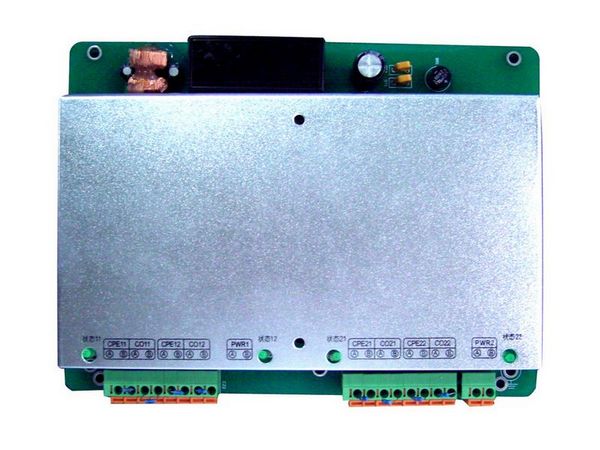
We have 2p,4p,8p and 154p. There is also a 1U rack mount chassis (19" rack) that holds four 2 port ipTV Boosters or ADSL extenders.

5. What about Noise and Interference?

This ADSL Loop Extender complies with T1.417 Spectrum Management requirements. This is a specification developed by Telcordia to insure that various services can coexist. This specification develops a mathematical model of the copper loop and the frequency spectrum of the potential interferer. The model then simulates all possible placements of the new product and evaluates the interference on adjacent lines. This process generates thousands of computations. Annex A computations are available upon request. A word of warning on the computations -- The results will be meaningless unless you also purchase the T1.417 specification from Telcordia.

Because this product automatically adjusts gain for the line conditions, it has a much lower impact on other services than any competing product. Each time the product syncs, it tries to sync with the minimum gain possible; if that doesn't work, it increases the gain and tries again. All the others have fixed or manual adjustments that may not comply with T1.417 if not placed in exactly the right spot and set to a specific, but unknowable setting.

6. Line conditions change over time. Temperature changes have a big influence on loop resistance. Sometimes wire sections are replaced, changing loop resistance. How does this product react to these changes?

This is the big advantage that the Widearea product has over all other competitors. The AER800 products automatically adjust the gain to reflect the line conditions. If line conditions change enough to drop sync, the automatic gain adjustment starts all over looking for the best gain for the conditions.


Last Updated on Wednesday, 20 February 2008 12:04